Acoustic plaster or acoustic panels? When the seamless solution is really worth it
6 min read

Almost no one thinks about acoustics before a room is built. The issue only becomes apparent once the walls are up, the floor is finished and the first conversations disappear into reverberation. Then comes the question of how to solve it, followed almost inevitably by another: acoustic plaster or acoustic panels? Applied seamlessly or installed as prefabricated elements, both reduce reverberation. The difference is not in the physics, but in how visible the solution is in the finished room and how well it suits the space.
The same effect, a completely different look
Acoustic panels and ceiling rafts are mounted on the ceiling or wall. Installation is quick, costs are easy to calculate and performance values are reliable. But the system is also visible: edges, grids and shadow gaps. The cheapest versions make this especially obvious. Melamine foam absorbers with the look of a baby mattress can be found online for around 50 euros and glued to the ceiling within an hour. Acoustically, that can be a perfectly solid solution, but visually it can be a painful compromise to the original beauty of a room.
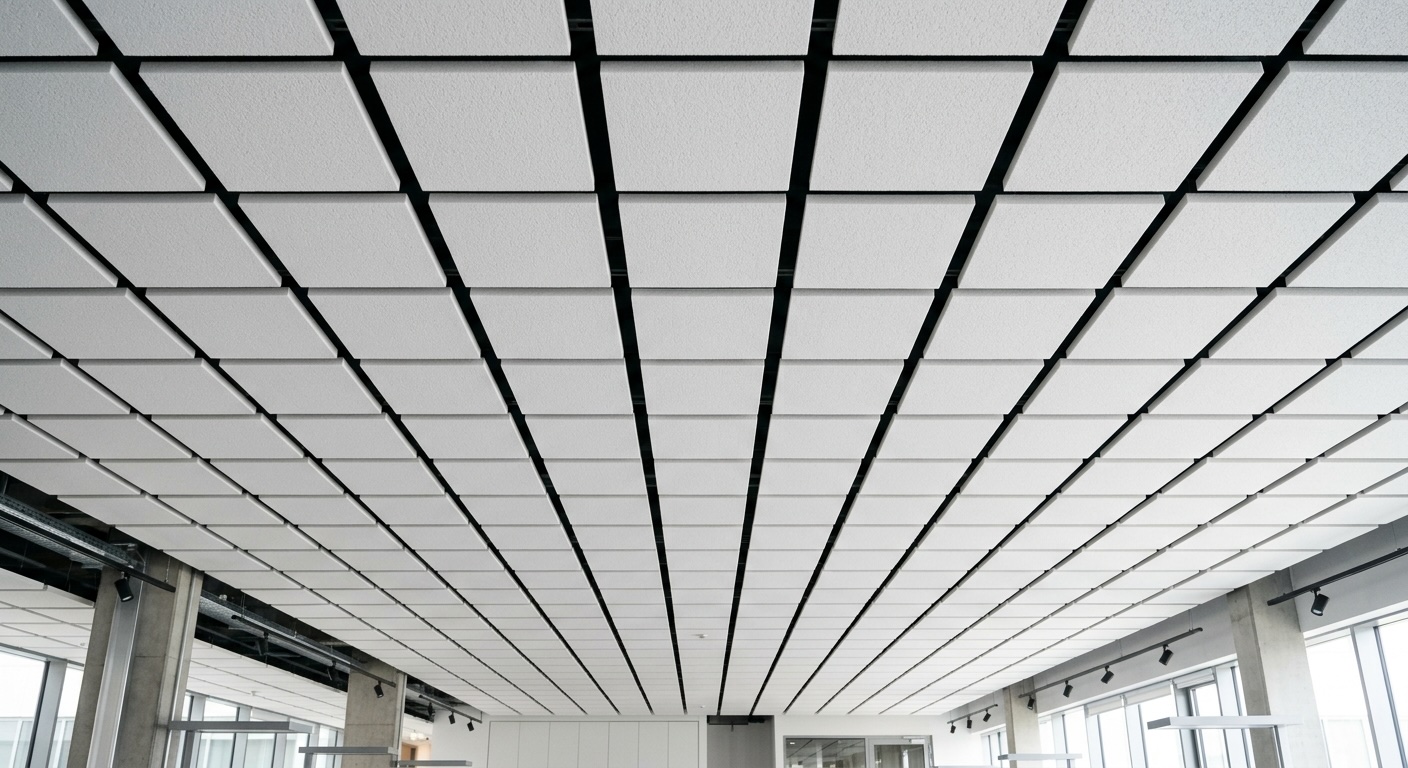
In an open-plan office or a school, that may not bother anyone. In a foyer or living space where the architecture is meant to take centre stage, it is often the wrong compromise.
Seamless acoustic plaster is applied directly to the surface without visible transitions. With DEKOZELL® ACOUSTIC PLASTER SUPERSMOOTH for example, the result looks like a normal, perfectly smooth plastered ceiling while still absorbing sound. This invisibility is the main reason to choose it. A second advantage is that repairs and refurbishment can be carried out completely invisibly, a special feature of DEKOZELL® acoustic plasters compared with competing systems and acoustic panels.
How both systems work
An honest comparison
A realistic look at cost and effort
Acoustic panels are often cheaper to purchase and quicker to install. Seamless acoustic plaster requires more skilled labour and therefore usually has a higher initial cost. Over the years, however, it has an advantage: replacing part of a visible system is immediately noticeable, whereas damaged areas in DEKOZELL® acoustic plaster can be repaired completely invisibly.
If you are thinking long term, it is worth looking at both sides of the calculation rather than just the initial price. We explain in detail which factors determine the price per square metre in our article How much does acoustic plaster cost? .
When acoustic panels are the smarter choice
If a surface needs to be removable later, for example in rented premises, panels have a clear advantage. In very large, purely functional spaces where appearance is secondary, modular suspended ceilings are also an excellent option in terms of value for money. For open-plan offices, schools or nurseries, they offer one of the best balances between acoustic performance and effort. Few solutions absorb sound so economically while also providing a ceiling system that can be installed extremely quickly and conceal pipes and data cables above it. Insisting on acoustic plaster in this situation means paying for elegance that hardly anyone in the room will appreciate.
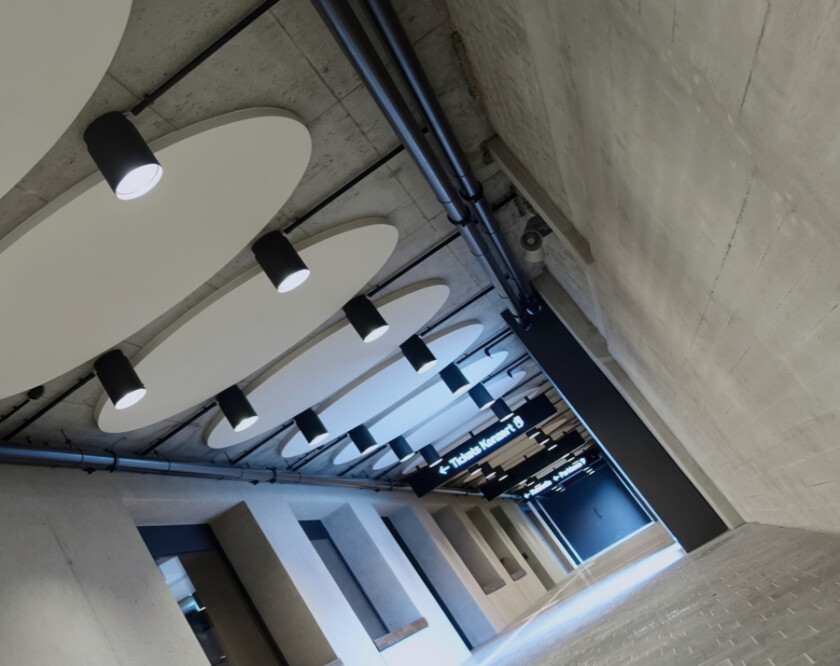
When seamless acoustic plaster is worth it
As soon as the surface becomes part of the design, the picture changes. In a reception area, medical practice or open-plan living space, a seamless ceiling looks calm and refined, while a grid of panels can immediately look like a retrofit or a shopping-centre ceiling. This is where the extra effort begins to pay off.
To understand why reverberation occurs in the first place and which surfaces are responsible, read our guide to improving room acoustics.
Acoustic plaster or panels: how to choose
In the end, almost everything comes down to one question: is the surface part of the design? If the architecture should remain the focus and the acoustic treatment needs to stay invisible, acoustic plaster is the right choice.
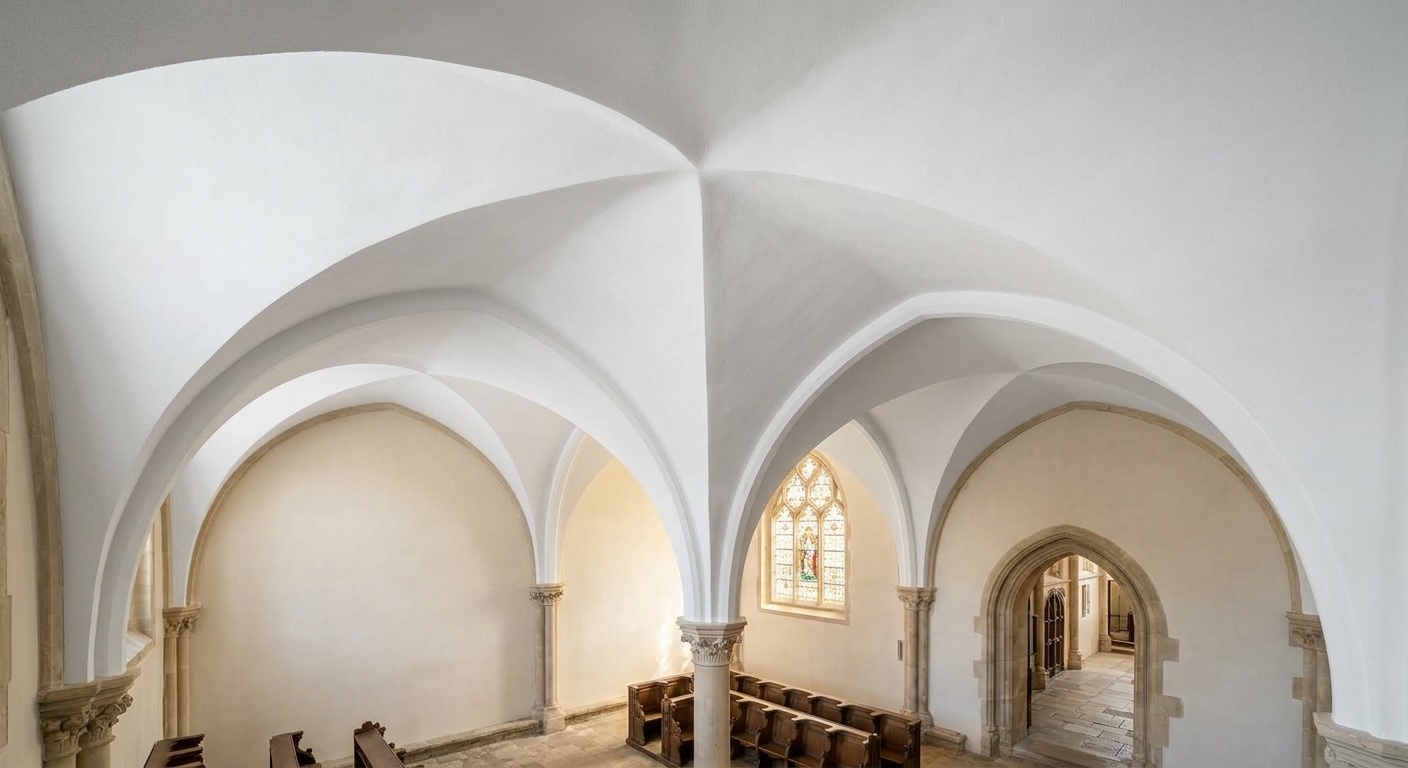
Budget and room size only shift the balance gradually: the larger and more functional the space, the more likely panels or suspended grid ceilings are to make economic sense. The more prestigious or private the use, the more worthwhile a seamless system becomes.
Frequently asked questions
Does acoustic plaster absorb as much sound as acoustic panels?
With the right system build-up, seamless acoustic plaster achieves high absorption values, particularly in the mid and high frequency ranges where speech and reverberation are most relevant. Low frequencies require greater build-up depth, so the specific room needs to be considered. Even invisible low-frequency absorbers are possible: the DEKOZELL® DISTANCE-Easy acoustic plaster system can be configured as a concealed bass trap. With around 20 cm of mineral wool behind it, it reaches considerably further into the low-frequency range than a thin surface layer while still looking like a normal wall or ceiling. The decisive factors are therefore the system build-up, layer thickness and treated surface area.
Is acoustic plaster more expensive than panels?
Usually yes in terms of initial investment, because it is applied by hand. Over its service life, however, the difference becomes less significant: damage to DEKOZELL® acoustic plaster can be repaired invisibly, helping to reduce follow-up costs.
Can acoustic plaster be combined with other solutions?
Yes. In many projects, acoustic plaster on the ceiling is combined with targeted measures on the walls. The right combination depends on the room.
Can acoustic plaster be removed again?
It is permanently bonded to the surface and therefore cannot be removed without damage. For areas that need to remain reversible, panels are the better choice.
AI tools were used to support the creation of these articles. Content, selection, contextualisation and final editorial review remain the responsibility of Thomas Neubauer.